When the Well Runs Dry: My Honest Reckoning With Creative Burnout
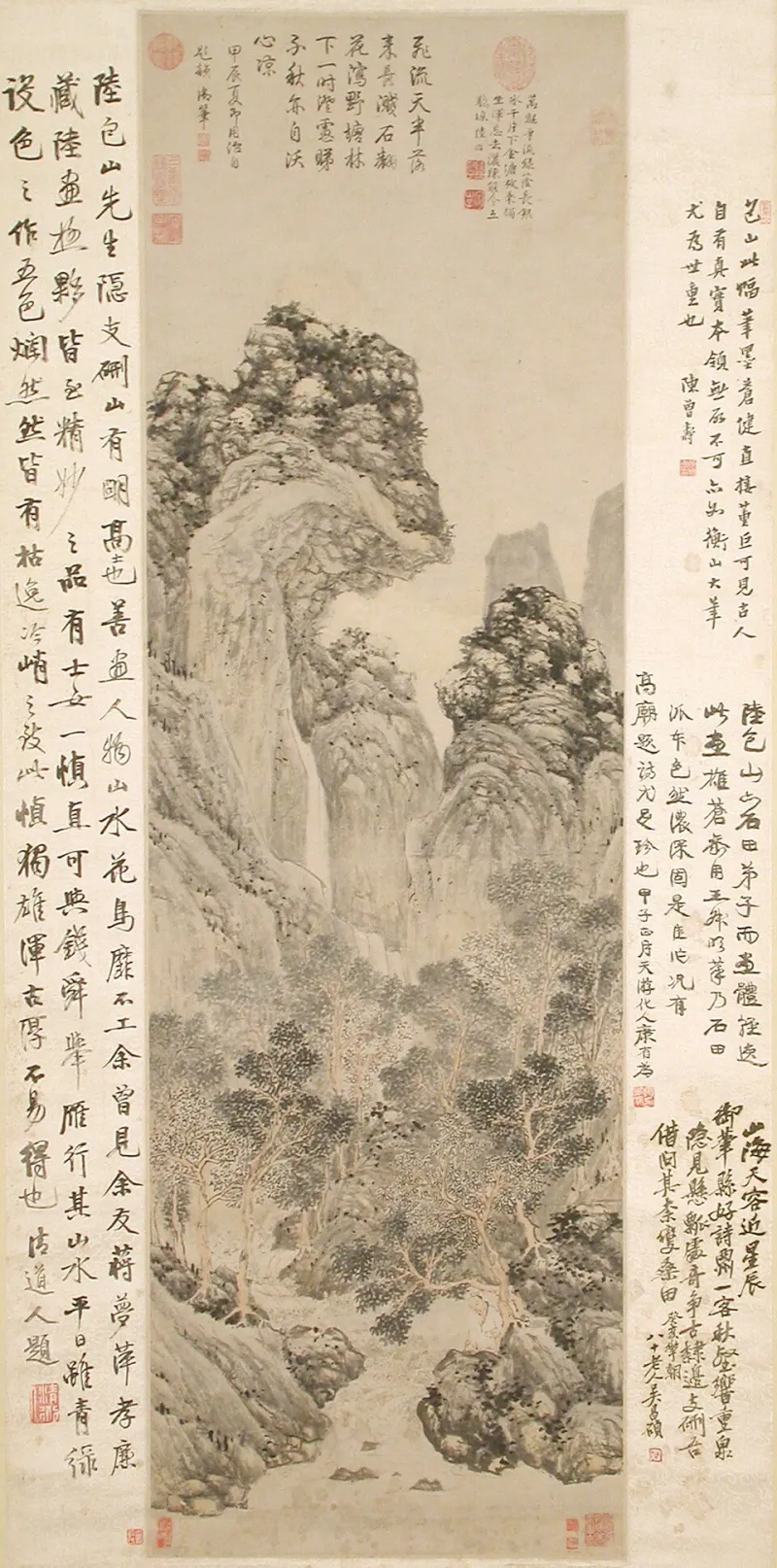
Photo: Lu Zhi, Public domain, via Wikimedia Commons
There's a particular kind of silence that settles in when you sit down to create and nothing comes. Not the peaceful, meditative quiet of a focused mind. The other kind. The kind that hums with low-grade panic and self-doubt. I know that silence well. Last year, it moved into my studio like an unwanted roommate and refused to leave for months.
I'm writing this because I think we don't talk about this enough — at least not honestly. We see the highlight reels, the finished pieces, the launch announcements. What we don't see is the artist staring at a blank canvas for the fourteenth day in a row, wondering if they ever had any real ideas to begin with.
So let me be that artist for a minute.
How It Actually Started
It didn't happen overnight. That's the sneaky thing about creative burnout — it creeps in gradually, disguised as a busy schedule or a rough patch. For me, it started with a stretch of back-to-back projects that I was genuinely excited about. I was producing, shipping, collaborating. It felt good. Great, even.
Then one morning I woke up and the excitement was just... gone. Like someone had flipped a switch while I was sleeping. I sat down at my desk, opened my sketchbook, and felt nothing. Not frustration, not sadness — just a flat, gray emptiness where the ideas used to live.
I tried to push through it the way I always had. Grind harder. Set a timer. Make something, anything. But forcing it only made it worse. Every bad sketch felt like proof that I'd lost whatever it was that made my work mine. Every abandoned concept felt like a small failure piling onto a larger one.
Looking back, I can see what happened clearly now: I had been running on output for so long that I'd completely neglected the input side of the equation. I wasn't consuming art, experiencing new things, or giving myself permission to just exist without producing. I had treated creativity like a factory and eventually the factory ran out of raw material.
The Turning Point (It Wasn't What I Expected)
I'd love to tell you that I found some elegant, disciplined solution. The truth is messier. The turning point came when I stopped trying to fix the block and just gave myself permission to be in it.
A friend dragged me to a jazz club in the city on a Wednesday night — not my usual scene, not my usual genre. I went mostly to get out of my own head. But sitting in that dark room, watching the musicians riff off each other, something loosened in my chest. There was no agenda. No deliverable. Just sound moving through space.
I didn't go home and suddenly create a masterpiece. But I did pick up a book I'd been ignoring for weeks. Then I went to a gallery opening I almost skipped. Then I took a long drive with no destination and just let my mind wander. I was feeding the well instead of drawing from it.
What Actually Helped: The Honest List
Changing the physical environment. I started working from different spots — a coffee shop, a park bench, my kitchen table instead of my studio. The change in scenery disrupted the mental association I'd built between my desk and that suffocating blankness. It sounds almost too simple, but location has a surprisingly powerful effect on creative state.
Consuming art outside my lane. I'm primarily a visual creator, so I deliberately spent time with music, film, and literature. Watching a Terrence Malick film or reading a short story collection by someone I'd never heard of gave my brain new textures to work with. Cross-pollination is real. Some of my most interesting ideas have come from unexpected artistic neighborhoods.
Lowering the stakes, radically. I started keeping a separate sketchbook that I declared officially off-limits from judgment. Nothing in it was for anyone. Nothing in it had to be good. It was just a place to mess around. That low-pressure playground became the most generative space I had during that period.
Talking to other creators. Not to compare progress or discuss projects, but just to hear that other people go through this too. There's something genuinely relieving about sitting across from someone you respect and hearing them say, yeah, I've been there, it passed. Community isn't just nice to have — it's part of the infrastructure of a sustainable creative life.
Redefining what "working" meant. I had to accept that walking, reading, watching, listening, and thinking were all part of the creative process. The Protestant work ethic runs deep in American culture, and I'd internalized a version of it that said if I wasn't visibly producing, I wasn't working. Unlearning that took deliberate effort.
What I Learned About Myself
The block taught me something I genuinely needed to know: I had been creating for something — for approval, for output, for the sense of forward motion — rather than creating from something. The work had become externally driven in a way I hadn't noticed until the external motivation dried up and there was nothing underneath it.
Getting through the block meant reconnecting with the reasons I started making things in the first place. Curiosity. Obsession. The weird private joy of making something that didn't exist before. Those things were still there. They'd just gotten buried under deadlines and metrics and the constant noise of trying to build something publicly.
If You're in It Right Now
First: you're not broken. The block is not a personality flaw or a sign that you were never really talented. It's a signal, usually, that something needs to shift — in your relationship to your work, your environment, or your creative diet.
Second: give yourself permission to be in it without trying to immediately escape it. Sit with the discomfort long enough to actually hear what it's telling you.
And third: go find something that has nothing to do with your medium and let it move you. A concert, a weird documentary, a hike in a place you've never been. The spark usually comes back through the side door, not the front one.
The well fills back up. I promise it does. You just have to stop demanding it produce while it's still refilling.