Why Saying 'I'm a Creator' Out Loud Still Makes You Want to Disappear
Somebody asked me what I do at a party a while back. Normal question. The kind you answer without thinking. Except I stood there for a beat too long, ran through about four different versions of an answer in my head, and landed on something vague enough to not require a follow-up.
I didn't say creator. I didn't say artist. I said something like, oh, I make stuff — content, mostly. And then I changed the subject.
I've been doing the work for years. I have the receipts. And I still couldn't say the word out loud without feeling like I was about to get called out by someone with a clipboard.
If that sounds familiar, this one's for you.
The Gap Nobody Talks About
There's a version of imposter syndrome that gets a lot of airtime — the kind where you've landed a big opportunity and you're terrified you don't deserve it. That one has a name. People write books about it. Therapists address it directly.
But there's a quieter version that lives upstream of all of that. It's the one where you haven't even let yourself claim the title yet. Where you're doing the work, building the thing, putting real hours into real output — and you still introduce yourself like you're apologizing.
This isn't about skill level. That's the part that trips people up. They think, once I'm good enough, I'll feel like I can say it. But that's not how it works. The identity gap isn't a skill problem. It's a permission problem.
And nobody's coming to hand you that permission. (Yeah, I know. We've talked about that one before.)
Where the Resistance Actually Comes From
Here's what I've noticed in myself and in a lot of people I've talked to: the resistance to claiming a creative identity usually isn't about low confidence. It's about high stakes.
When you say I'm a creator or I'm an artist, you're doing something that feels irreversible. You're making a claim that other people can now hold you to. You're opening yourself up to the follow-up questions — Oh yeah? What have you made? Can I see it? How's that going for you?
And somewhere in the back of your head, you've already decided that whatever you'd show them isn't enough. The work isn't finished enough, successful enough, recognized enough. So you hedge. You downplay. You call yourself someone who dabbles or someone who does this on the side or someone who's figuring it out.
Which, fine. But here's the thing: that framing doesn't protect you. It just keeps you stuck in a holding pattern with no real runway.
The Legitimacy Trap
A lot of us are waiting for some external marker to flip the switch. A certain number of followers. A feature in a publication. A client with a recognizable name. A paycheck that crosses some arbitrary threshold.
We've essentially outsourced our identity to metrics we don't even fully control.
I spent a long time doing this. Thinking, when X happens, I'll finally feel like I can say it for real. And then X would happen, and I'd move the goalposts. Because the legitimacy was never actually about the milestone. The milestone was just the excuse I was using to delay the discomfort of owning it.
The trap is that external validation feels like it should work. It makes logical sense that recognition from the outside would quiet the noise on the inside. But it doesn't, not in any lasting way. The noise just finds a new reason to stay.
What Reframing Actually Looks Like (Without Being Cheesy About It)
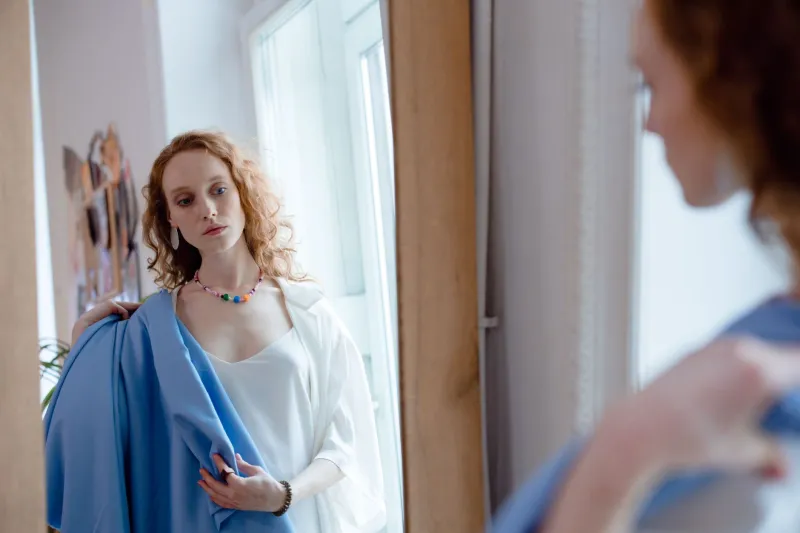
I'm not going to tell you to stand in front of a mirror and repeat affirmations. That's not what this is.
But I will say this: the shift from I make things to I am a creator is less about confidence and more about accuracy.
You're not inflating yourself when you claim the title. You're just being precise. If you spend meaningful time and energy producing creative work — writing, designing, filming, building, performing, whatever your version of it is — then creator is a factual description of what you do. It's not a brag. It's a category.
One thing that helped me was separating identity from outcome. I'm a creator whether or not the last thing I made landed the way I wanted it to. A chef doesn't stop being a chef because a dish didn't turn out. A photographer doesn't lose the title because a shoot felt off. The doing is the thing. The title follows the doing, not the results.
Another thing: practice saying it in low-stakes situations. Not to perform confidence you don't have, but to get comfortable with the sound of it. Say it to a friend who already knows your work. Say it in an email bio. Say it when someone asks, even if your voice does that slightly weird thing where it goes up at the end like it's a question.
The more you say it, the less it feels like a lie. That's not fake-it-till-you-make-it logic. That's just how language and identity work together over time.
The Part Where I Get Honest With You
I still have moments where it feels weird. Where I hedge, or qualify, or wait to see how someone reacts before I commit to the full sentence. I don't think that ever goes away completely.
But I've stopped treating that discomfort as evidence that something is wrong. It's not a signal that I'm overstepping. It's just the feeling that shows up when you're doing something that matters to you and you're putting it out in the world where other people can see it.
That feeling isn't the imposter. That feeling is the work.
You don't have to have it all figured out to say what you are. You just have to be willing to say it, sit with the weirdness for a second, and keep going anyway.
That's kind of the whole job.