Your Inspiration Folder Is Lying to You

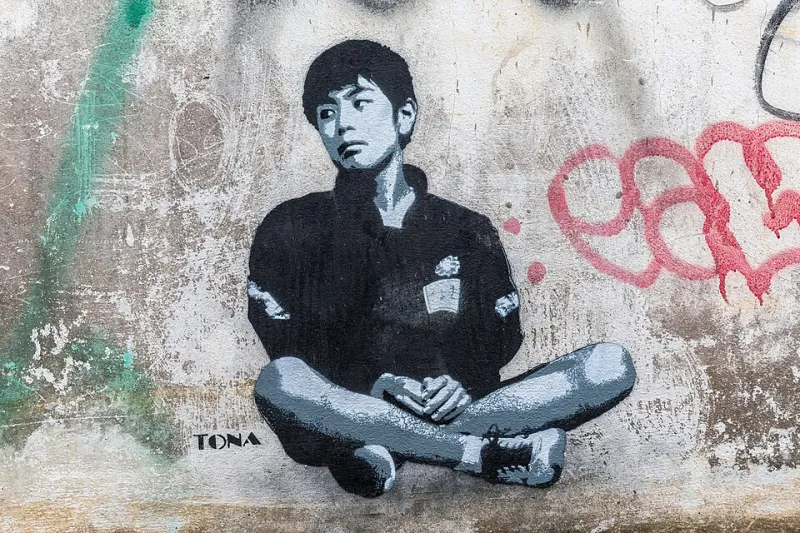
Photo: Peter Klashorst, CC BY 2.0, via Wikimedia Commons
I have a folder on my desktop called "Inspo." It's been there for years. At some point it had subfolders — color palettes, layouts, copy I admired, campaigns that stopped me mid-scroll. I told myself it was research. I told myself it was how serious creators operated.
What I didn't tell myself — couldn't, maybe — was that every time I opened that folder before starting a new project, I came out the other side a little less sure of myself.
When Research Becomes a Holding Pattern
There's a version of reference-gathering that's genuinely useful. Architects study buildings. Novelists read obsessively. Directors watch everything they can get their hands on. That kind of study is active — it's pulling technique apart, understanding structure, asking why something works.
But there's another version that's more like doom-scrolling with a productivity label slapped on it. You're not analyzing. You're comparing. And comparison, especially the unconscious kind, is one of the most efficient ways to talk yourself out of your own instincts.
Here's what actually happens in the brain when you spend an hour deep in someone else's portfolio before sitting down to make your own work: you've just loaded up a very specific set of standards that have nothing to do with what you're trying to say. You've marinated in someone else's voice. And then you wonder why yours sounds a little off.
Psychologists call this "social comparison theory" — the idea that we evaluate our own abilities and output by measuring them against others. It's a deeply human instinct. It's also, for a working creator, kind of a disaster.
The Specificity Problem
Here's the thing about looking at other people's finished work: you're always seeing the highlight reel. The polished version. The piece that made it through seventeen drafts and a round of feedback and maybe a complete conceptual overhaul.
You're not seeing the ugly middle. You're not seeing the version they almost shipped before they figured it out. You're comparing your rough draft energy to their final-cut confidence, and that comparison is structurally rigged against you.
Worse, when you study competitors specifically — people doing roughly what you do, for roughly the same audience — you start unconsciously calibrating your ambitions to theirs. You stop asking "what do I want to make?" and start asking "what do they make that I could do better?" That's a fundamentally different creative question, and it leads you somewhere fundamentally different.
Smaller. It leads you somewhere smaller.
I Caught Myself Doing It
A while back I was developing a new body of work — something that felt genuinely risky to me, a direction I hadn't gone before. And I did what I always do: I opened the folder. I pulled up accounts I respected. I started mapping where my idea fit in the landscape.
By the end of that session, I had talked myself into something safer. Something that made more sense in context of what was already out there. Something that wouldn't require me to explain myself as much.
I shipped it. It was fine. Nobody hated it. And I felt almost nothing when it went out, because I already knew it wasn't the thing I'd actually wanted to make.
That's the quiet cost of over-referencing. It's not that your work gets bad. It's that it gets correct. Technically defensible. Derivative in ways that are just subtle enough that you can pretend they're intentional.
How to Study Without Disappearing Into Someone Else's Work
I'm not saying delete the folder. I'm saying be more intentional about when you open it and what you're actually looking for when you do.
Study work that's adjacent, not parallel. If you're a graphic designer, spend time with architecture photography. If you write personal essays, read poetry. Cross-disciplinary reference is almost always more generative than competitor research, because you're borrowing structure and sensibility without borrowing identity.
Study old work more than current work. The classics aren't competing with you. A 1970s record album, a mid-century magazine layout, a film from the French New Wave — these things can teach you everything about craft and nothing about what's trending right now, which is exactly the right ratio.
Separate the study session from the creation session. Hard rule. If you're going to spend time in reference material, do it the day before, or the week before, not the hour before. Let it digest. Let it become part of your thinking rather than a template you're actively trying to match.
Ask different questions. Instead of "how does this compare to what I'm making," try "what problem was this creator solving?" or "what would I have done differently?" Analytical distance changes everything.
The Voice That Gets Quieter
Every creator has a voice. I genuinely believe that. The problem is that voice requires a certain amount of quiet to hear — and a reference folder full of other people's most confident work is the opposite of quiet.
Your instincts are not wrong because they don't look like someone else's. They're not underdeveloped because they haven't been validated yet. They're just yours, which means they're unfamiliar, which means they're going to feel uncertain for a while before they feel true.
That uncertainty is not a sign to go look at what everyone else is doing. It's a sign you're close to something that actually belongs to you.
Close the folder. Start the thing.