Your Artist Statement Shouldn't Sound Like a Press Release
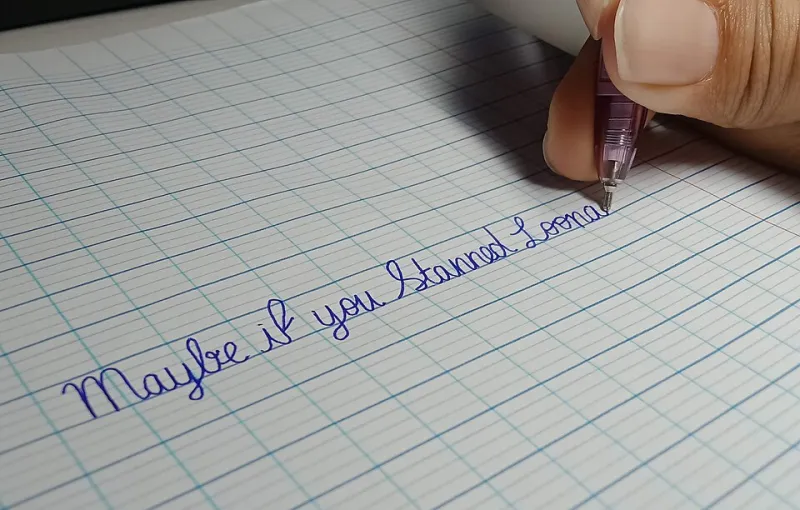
Photo: Jiafei Slay Queen, CC0, via Wikimedia Commons
Let me read you something. Tell me if this sounds familiar:
"My work explores the intersection of identity, memory, and the constructed nature of reality through a multidisciplinary lens, challenging viewers to interrogate their assumptions about space, time, and the human condition."
Every word in that sentence is technically fine. And yet — nothing. No texture. No personality. No actual information about what this person makes or why they make it. It could describe approximately 40,000 artists working in the US right now.
This is the artist statement problem. And if you've ever had to write one — for a gallery submission, a grant application, a portfolio site, a press kit — you know exactly how easy it is to slip into this mode. The language feels safe. Professional. Serious. Like the kind of thing an artist should say.
But it doesn't connect. And connection is the whole point.
Why Most Artist Statements Fail
Before we talk about how to write a good one, it's worth diagnosing why so many go wrong.
First, there's the jargon problem. A lot of artists — especially those who came up through academic fine arts programs — absorb a specific vocabulary that sounds authoritative in a critique setting but reads as opaque to everyone else. Words like liminal, praxis, interrogate, and deconstruct can be genuinely useful in the right context. In an artist statement aimed at a general audience? They create distance.
Second, there's the abstraction trap. It feels risky to be specific. Specific claims can be disagreed with. Specific influences can be judged. So we retreat into the abstract, where everything is safely un-falsifiable. The result is writing that's technically accurate but emotionally empty.
Third — and this one's sneaky — there's the performance of seriousness. We think that if our work is meaningful, our statement about it needs to sound weighty. Casual language feels like it undersells the work. But readers experience it differently: heavy, impersonal prose signals that the writer is more concerned with seeming legitimate than with actually communicating.
The One Question Your Statement Has to Answer
Strip away everything else and an artist statement is really just answering one question: Why do you make what you make?
Not what techniques you use. Not what movements you're influenced by. Not what your work "explores" or "challenges" or "interrogates." Why. What's the underlying drive? What problem are you trying to solve, or what feeling are you trying to create, or what truth are you trying to hold up to the light?
When I was putting together my own statement a few years back, I kept writing around this question instead of through it. I'd describe my process, my influences, my output. Everything except the actual reason I was doing any of it. A mentor finally called me out: "I know what you make. I still don't know why you make it."
That reframe changed everything. Once I started with the why, the rest of the statement organized itself around a real center of gravity.
A Framework That Actually Works
Here's the structure I've landed on, both for my own statement and when I've helped other creators work through theirs. Think of it as four building blocks:
1. The Hook (1-2 sentences) Open with something specific and concrete. A moment, an image, an observation. Not "I have always been drawn to the intersection of..." but something that drops the reader into a real place. This sets the tone and signals immediately that you're going to be direct.
2. The Why (2-3 sentences) Here's where you answer the central question. What drives your practice? What are you genuinely trying to do or say or figure out? Be honest, even if it feels vulnerable. Especially if it feels vulnerable.
3. The How (2-3 sentences) Now — and only now — talk about your medium, your process, your approach. By this point, the reader understands why you make things, so the how lands with actual meaning. Without the why, process descriptions are just technical specs.
4. The Invitation (1-2 sentences) Close by gesturing toward the audience. What do you hope they take away? What conversation are you hoping to start? This doesn't need to be grand — it just needs to acknowledge that the work exists in relationship with other people.
Making It Sound Like You
The biggest enemy of a good artist statement is the voice you think you're supposed to use. Here are a few practical techniques for finding your actual voice on the page.
Talk it out first. Literally. Set a voice memo on your phone and answer the question "Why do you make what you make?" out loud, without stopping. Don't edit yourself. Just talk for two or three minutes. Then transcribe it. You'll find sentences in there that are more alive than anything you'd write from scratch, because you weren't performing — you were just talking.
Read it aloud before you finalize it. If you stumble over your own words or find yourself reading in a slightly robotic cadence, that's the sentence that needs to be rewritten. Your statement should sound like how you actually talk, not like a grant application.
Replace every piece of jargon with plain language. Go through your draft and flag any word that you wouldn't use in a conversation with a smart friend who doesn't work in your field. Then replace it. If you can't replace it because the plain-language version doesn't capture what you mean, that's a signal that the idea itself needs more clarity.
Cut it shorter than feels comfortable. Most first drafts are about twice as long as they need to be. A tight, confident 150-word statement beats a meandering 400-word one every time. Brevity signals that you know what you're trying to say.
A Note on Audience
One more thing worth thinking about: who is actually reading this?
A statement for a gallery submission might need slightly different language than one on your personal portfolio site. A statement aimed at potential collaborators is doing different work than one aimed at press. You don't need a completely different document for each context, but you should know who you're primarily writing for — and make sure the language, specificity, and tone are calibrated for that reader.
The goal in every case is the same: make them feel like they understand something real about you and your work that they didn't understand before. Make them curious. Make them want to see more.
That's it. That's the whole job.
Start with why. Use your actual voice. Cut until it hurts. And resist the press release.