The Parts of Your Voice a Prompt Can’t Borrow
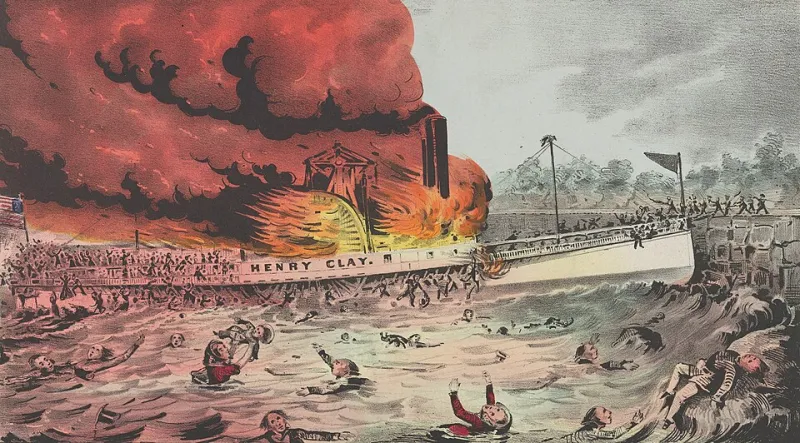
Photo: Nathaniel Currier, Public domain, via Wikimedia Commons
Last month I watched someone type a description of my work into a chat box and get back an image that looked, at a glance, like something I might make. Same palette. Same mood. Same kind of lonely window light. It was a decent imitation. It was also completely inert. The picture had no reason to exist beyond the prompt.
That is not a doom speech. It is a useful diagnostic. In 2026, imitation is cheap. What is not cheap is a point of view that has been shaped by time, constraints, and a life. If you want to make work that a prompt cannot fully reproduce, you do not need to become anti-technology. You need to become more specific about where your voice actually comes from.
A prompt flattens the decision trail
When I make a piece, I leave a trail of decisions. I choose this crop because the client wanted it wider. I choose this color because the light in the room was failing. I choose this sentence because the first ten versions were too clever. The final work is not just an object. It is a record of those choices.
A prompt can describe the object. It cannot reconstruct the trail. And the trail is where the voice lives. That is why two artists can use the same tools and still make work that feels different. The tool is not the signature. The decisions are.
Constraints are a fingerprint
Every artist I admire has a set of constraints they did not choose and a set they did. A small studio. A limited palette. A cheap camera. A body that gets tired at a certain hour. A fear of wasting materials. A love of one ugly color.
Those constraints force decisions. Decisions become habits. Habits become style. AI can imitate the output of a style, but it does not have your constraints. It does not have your rent, your schedule, your bad knee, your stubborn refusal to use a certain font. Those things are not obstacles to your voice. They are ingredients.
So instead of trying to be more generically impressive, try being more locally specific. What can you make because of your limitations that someone with unlimited options would never think to make?
Lived experience has a texture
I do not mean that you need a dramatic biography. I mean that your work carries the texture of where you have been and what you have paid attention to. The way you write about a diner depends on whether you have actually sat in one at 2 a.m. The way you photograph a family depends on whether you have been in a family that was happy, or tired, or both.
A model can describe a diner. It cannot remember the smell of the coffee or the particular way the waitress said honey. Those details are not decoration. They are evidence of a person behind the work. And evidence is harder to fake than style.
The body knows things the model does not
Physical process matters more than we like to admit. The weight of a brush. The resistance of clay. The sound of a tape recorder. The walk to the post office. The fact that your hand shakes when you are nervous and that shake ends up in the line.
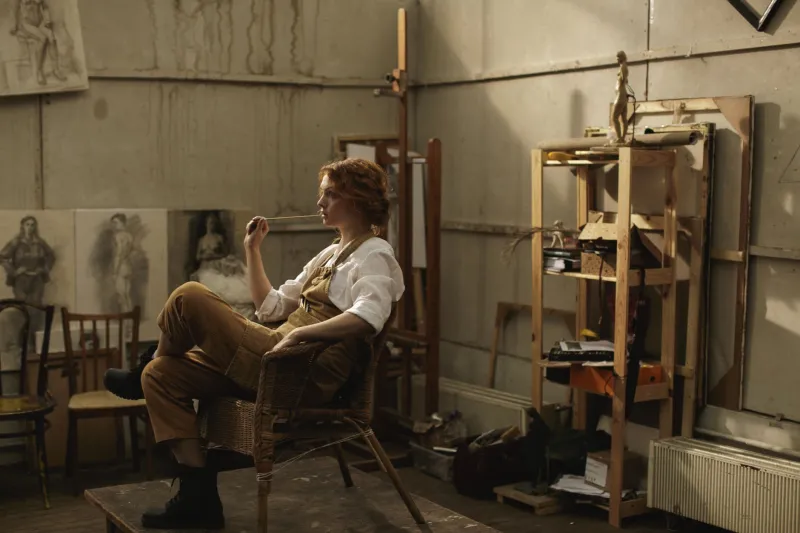
AI can generate a picture of a studio. It cannot generate the afternoon you spent in one, getting the light wrong, ruining a shirt, and learning something. That learning shows up in the work. It is slow. It is inefficient. It is also yours.
Mistakes are not noise
A prompt is built to avoid mistakes. It gives you a clean average. Your mistakes are not a bug in your voice. They are part of it. The missed note, the weird crop, the sentence that runs too long, the color that should not work but does. Those are the places where a person shows up.
I am not saying to be sloppy. I am saying not to sand off every strange edge in the name of polish. A perfectly average image is exactly what a prompt can make. A specific mistake is harder to copy.
Community is a co-author
Your voice is not formed in isolation. It is formed by the people who argue with you, teach you, commission you, reject you, and show up to your openings. That is not a soft point. It is a practical one. Community gives you context. Context gives you meaning. Meaning is the thing a prompt cannot invent from nothing.
So spend time with people who make work differently than you do. Go to the weird show. Take the workshop. Answer the email from the younger artist. Your voice gets deeper when it is in conversation, not when it is in a vacuum.
What to practice instead
If you want to build a signature that holds up in 2026, practice specificity. Keep a list of your constraints. Notice your recurring obsessions. Document your decisions, not just your outputs. Make things by hand when you can. Let a mistake stay. Talk to people who will tell you the truth.
The goal is not to make work that cannot be imitated. Anything can be imitated. The goal is to make work that cannot be fully explained by a prompt. That work has a trail. It has a body. It has a community. It has a reason to exist. That is the part you keep.