You're Already Allowed: Stop Waiting for Someone to Unlock Your Next Creative Chapter

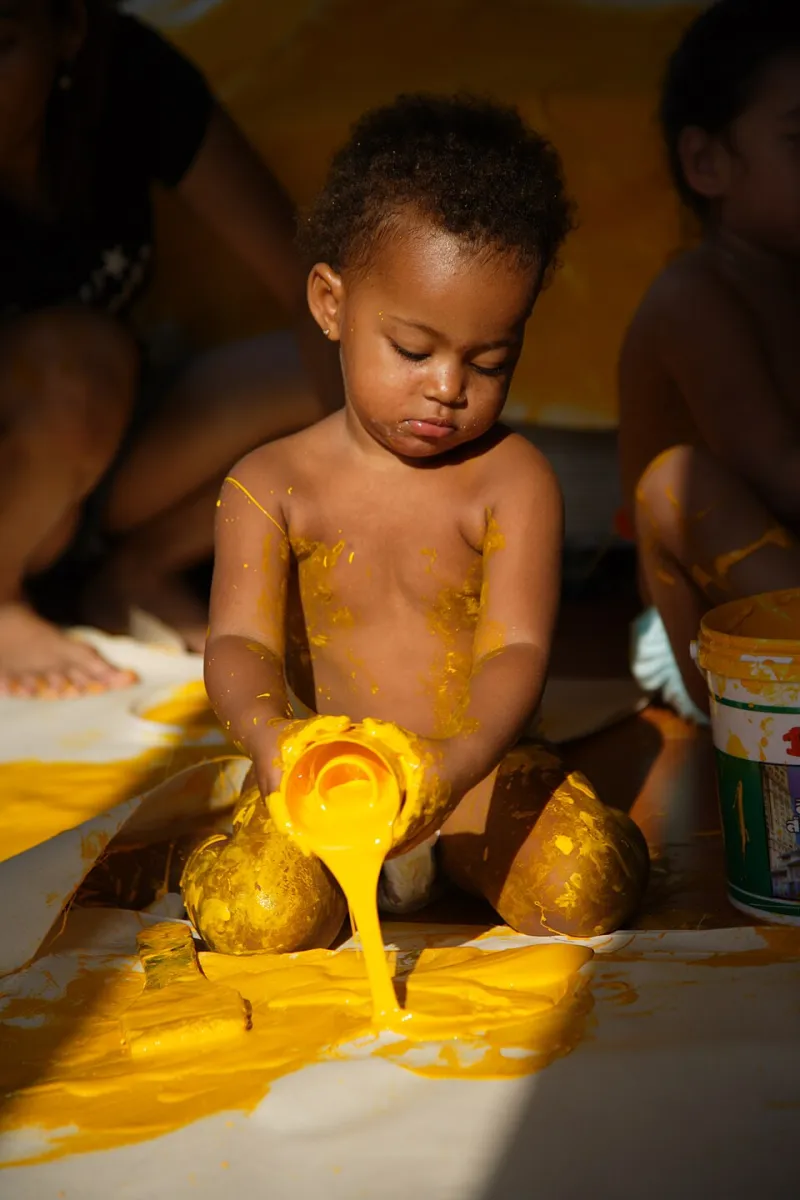
Photo by Photo by mehrab zahedbeigi on Unsplash on Unsplash
There's a particular kind of paralysis that doesn't look like paralysis from the outside. You're still posting. Still showing up. Still technically making things. But deep down, you know you're not making the thing. The real thing. The risky, weird, potentially embarrassing thing that's been living in your chest for months—maybe years.
You're waiting for permission.
I know because I did it too. For a long time, I kept a whole category of ideas in a mental folder I called "not yet." Not yet until I had more followers. Not yet until I'd paid more dues in my current lane. Not yet until someone whose opinion I respected looked at what I was already doing and said, yeah, you've earned it.
Here's the uncomfortable thing I eventually had to admit: that moment was never going to come. Not because I wasn't good enough, but because the permission I was waiting for was mine to give in the first place.
The Gate You Built (And Forgot You Built)
Creative gatekeeping from the outside is real—let's not pretend otherwise. Industries have hierarchies. Opportunities aren't distributed equally. There are genuine structural barriers that creators, especially those from underrepresented backgrounds, face every single day.
But there's a second kind of gate that's sneakier and, honestly, more damaging in the long run. It's the one you constructed yourself, usually out of borrowed beliefs. Someone once told you that you had to master your current style before experimenting with a new one. Or you internalized the idea that pivoting means quitting. Or you watched someone get publicly roasted for trying something outside their established identity, and you quietly decided: not worth the risk.
These aren't industry rules. They're stories. And unlike actual structural barriers, stories can be rewritten.
The tricky part is that self-imposed gatekeeping often disguises itself as wisdom. It sounds like healthy self-critique. It sounds like patience, professionalism, humility. And sometimes it genuinely is those things. The hard work is learning to tell the difference between I'm not ready because I need more time with this craft and I'm not ready because I'm scared of what happens if I try and people don't like it.
The Difference Between Self-Critique and Self-Censorship
Healthy self-critique is a gift. It's the internal editor that keeps you from shipping something sloppy, the voice that pushes you to go one layer deeper before you call something done. Every working creator I respect has a strong version of this voice.
Self-censorship is something else entirely. It's not asking is this my best work? It's asking do I have the right to make this at all? It's the voice that says your audience followed you for one thing, so who are you to give them something different. It's the voice that says you haven't suffered enough, studied enough, or succeeded enough to be taken seriously in a new direction.
That voice is not your editor. That voice is fear wearing a lab coat.
The tell, for me, is usually in the timeline. Self-critique has a natural endpoint—you refine the work, you make a decision, you move. Self-censorship is indefinite. There's always one more qualification you haven't met yet, one more milestone that would finally make you legitimate enough to try.
What Granting Yourself Permission Actually Looks Like
I'm not going to tell you to just believe in yourself and everything will fall into place. That's not how this works, and honestly, that advice has always annoyed me.
Granting yourself creative authority is a practice, not a mindset shift you flip like a switch. Here's what it's looked like in my own work:
Start smaller than you think you need to. If you want to experiment with a new direction, you don't have to blow up your entire output to do it. Make one thing in the new vein. Keep it low-stakes. The point isn't to announce a rebrand—it's to prove to yourself that the creative muscles work before you build a whole gym around them.
Name the specific permission you're waiting for. Get concrete. Write it down if you have to. "I'm waiting until I have 10,000 followers" or "I'm waiting until a publication I respect covers my work" or "I'm waiting until I feel financially stable enough to take the risk." When you say it out loud, you can start interrogating whether that benchmark is actually meaningful or just an arbitrary finish line you invented to delay the scary thing.
Separate the experiment from the identity. One of the biggest reasons creators avoid evolution is the fear that trying something new means abandoning what came before—and by extension, the audience that connected with it. But trying something is not the same as becoming it permanently. You're allowed to explore without relocating.
Find one person who did it first. Not to copy them, but to break the spell of impossibility. When you see someone you respect make a left turn in their career and land on their feet, it recalibrates what you believe is allowed. That's not inspiration in the vague, motivational-poster sense. That's evidence.
The Validation You're Actually Looking For
Here's the thing about external validation: it's real, and it feels genuinely good when it shows up. I'm not going to pretend otherwise. Having your work recognized by people you admire is meaningful. Building an audience that cares is meaningful.
But validation is a response to work that already exists. It can't come before the work. And if you're using its absence as a reason not to make the work, you've created a loop with no exit.
The creators I find most compelling—across every medium—are the ones who seem to be operating on their own internal clock. They evolve in ways that sometimes confuse their audience, sometimes delight them, and occasionally do both at once. What they share isn't fearlessness, exactly. It's more like they've decided that their own creative curiosity is a legitimate authority. That their desire to grow is, by itself, sufficient reason to try.
You don't need a co-sign. You don't need a bigger platform. You don't need to wait until the current chapter feels complete enough to justify starting the next one.
The permission you've been looking for? You've had it the whole time. You just have to stop pretending otherwise.