Why Picking a Lane Might Be the Worst Career Advice You Ever Followed
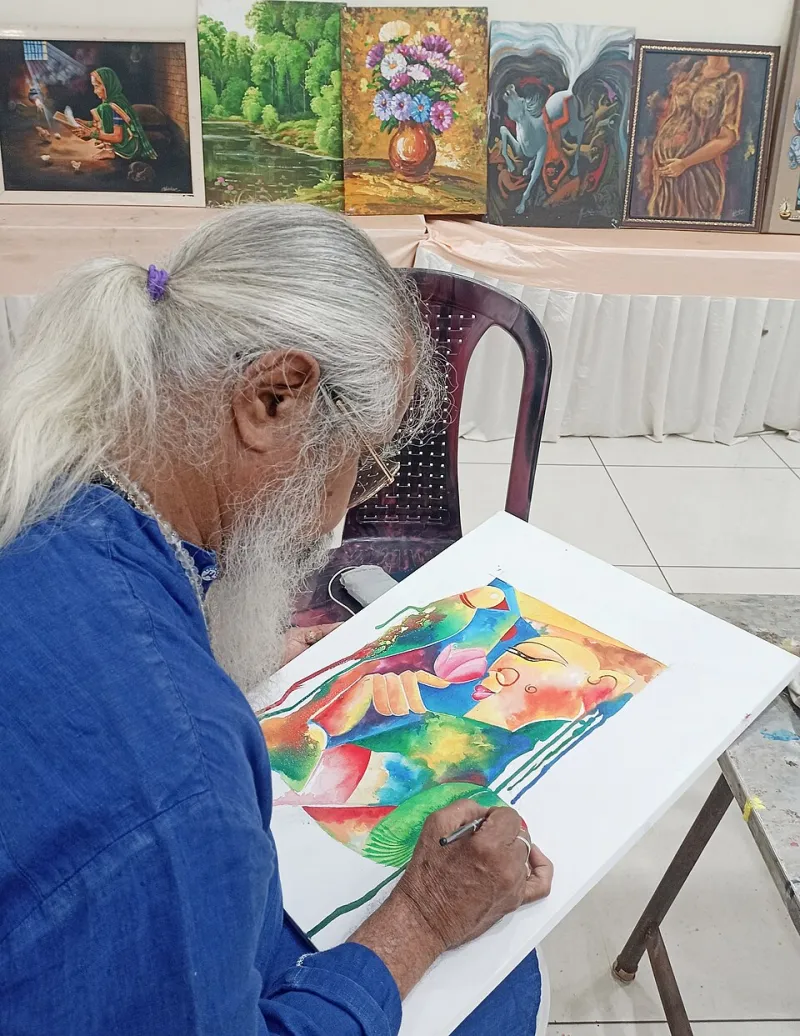
Photo: Kalasagary, CC BY-SA 4.0, via Wikimedia Commons
At some point in almost every creator's career, someone pulls them aside and delivers the advice with total confidence: pick a niche and own it. Find your lane. Build your brand around one thing. Become the go-to person for that specific thing, and don't muddy the waters by chasing other interests.
It sounds reasonable. It might even sound like wisdom. And for certain business models — particularly content creation built around algorithms — it has some practical logic behind it.
But as creative philosophy? As a framework for building a long, interesting, artistically alive career? I think it's one of the most limiting ideas we keep passing around like it's gospel.
Where the "Pick a Niche" Advice Comes From
Let's be fair to the other side here. The niche-down argument has real merit in specific contexts. If you're building a YouTube channel and trying to grow from zero, specificity helps the algorithm surface your content to the right audience. If you're a freelancer trying to command premium rates, specialization signals expertise. These are legitimate, practical points.
But there's a category error that happens when we take marketing logic and apply it to artistic development. Your brand strategy and your creative practice are not the same thing. Conflating them is where creators get into trouble.
The advice to "stay in your lane" is essentially telling you to optimize for legibility — to make yourself easy for other people to categorize and recommend. That's useful for short-term positioning. It can be quietly catastrophic for long-term growth.
The Ceiling You Don't See Coming
Here's what actually happens when creators stay too narrow for too long: they hit a ceiling they didn't know was there.
You get good — genuinely good — at your specific thing. And then you get stuck. Not because you've run out of skill to develop, but because you've run out of input. Mastery within a narrow lane eventually means you're drawing from a shrinking well. The work starts to feel repetitive. Your audience can feel it too, even if they can't articulate why. The energy shifts.
Creativity isn't just about technique. It's about cross-pollination. The ideas that make work interesting almost always come from somewhere outside the work's own tradition. A filmmaker who only watches film. A novelist who only reads novels. A designer who only looks at design. These are people who have quietly cut themselves off from the most valuable source of fresh perspective: everything else.
The constraint that once helped you focus becomes the wall that keeps you circling the same territory.
The Most Interesting Creators Don't Stay Put
Look at the artists and creators whose work has genuinely moved you over the years. I'd be willing to bet that most of them resist easy categorization. They work across forms. They shift gears in ways that occasionally confuse their audiences. They follow curiosity into uncomfortable territory.
David Bowie didn't pick a lane. Neither did Patti Smith, or Jean-Michel Basquiat, or Spike Lee, or Janelle Monáe. These aren't people who succeeded despite their range — their range is inseparable from what makes their work vital. The willingness to move, to borrow, to abandon comfort zones and try something adjacent (or completely unrelated) is part of what keeps them interesting across decades.
This isn't just a phenomenon among iconic names. Some of the most compelling independent creators working today are the ones who refuse to be pinned down. The photographer who makes short films. The essayist who also produces music. The illustrator who writes fiction. Their audiences follow them not because they know exactly what to expect, but because they trust that whatever comes next will be worth showing up for.
Range as Competitive Advantage
Here's the reframe I want to offer: your creative range isn't a liability you need to manage. It's a skill set that compounds over time in ways that specialists can't replicate.
Every medium you work in teaches you something that transfers. Writing makes you think about narrative in a way that changes how you approach visual work. Music teaches you about rhythm and tension in a way that affects pacing in everything else. Photography changes how you see. Performance changes how you think about presence and timing. These aren't separate skill trees — they're one interconnected system, and the more of it you develop, the richer every individual piece of work becomes.
The creator who can write, shoot, edit, and design isn't just more versatile in a practical sense. They bring a layered sensibility to everything they make. That layering is visible in the work, even when audiences can't name exactly what they're responding to.
When Constraints Actually Help
I want to be clear: I'm not arguing against focus. There's a difference between focus and confinement.
Focus is choosing where to put your energy right now. It's a temporary, intentional decision that serves the work in front of you. Confinement is a permanent identity claim — an agreement to stay inside a defined box in exchange for the comfort of a clear brand.
Constraints can be genuinely useful creative tools. Working within a limited format, a specific medium, a defined aesthetic — these can sharpen your thinking and push you toward solutions you wouldn't find in open-ended territory. The key word is tool. Constraints serve you. You don't serve them.
The question to ask yourself isn't what's my niche? It's what am I genuinely curious about right now, and what's the best form for that curiosity to take? Sometimes the answer is the thing you're known for. Often, it's something else entirely.
Give Yourself Permission to Wander
If you've been holding back a project because it doesn't fit your "brand," or avoiding a new medium because you're worried about confusing your audience, I want to offer a different perspective.
Your audience — the people who actually care about your work — followed you because of something in you, not because of a category. They're more adaptable than the algorithm would have you believe. And the work you make when you're genuinely exploring something new carries an energy that polished, on-brand content simply can't match.
Pick up the medium you've been scared to try. Write the piece that doesn't fit. Make the thing that's hard to explain.
The lane was always optional.